


For decades, the global art market operated along a predictable axis linking New York, London, Basel, and Hong Kong. Today, that gravitational map is being redrawn across the sands of the Arabian Peninsula. With its announcement that it is taking over Abu Dhabi Art and rebranding the event as Frieze Abu Dhabi in November 2026, the London-founded fair powerhouse has planted its flag squarely in the United Arab Emirates—setting the stage for an extraordinary institutional showdown with archrival Art Basel, which prepares to debut Art Basel Qatar in Doha this February.
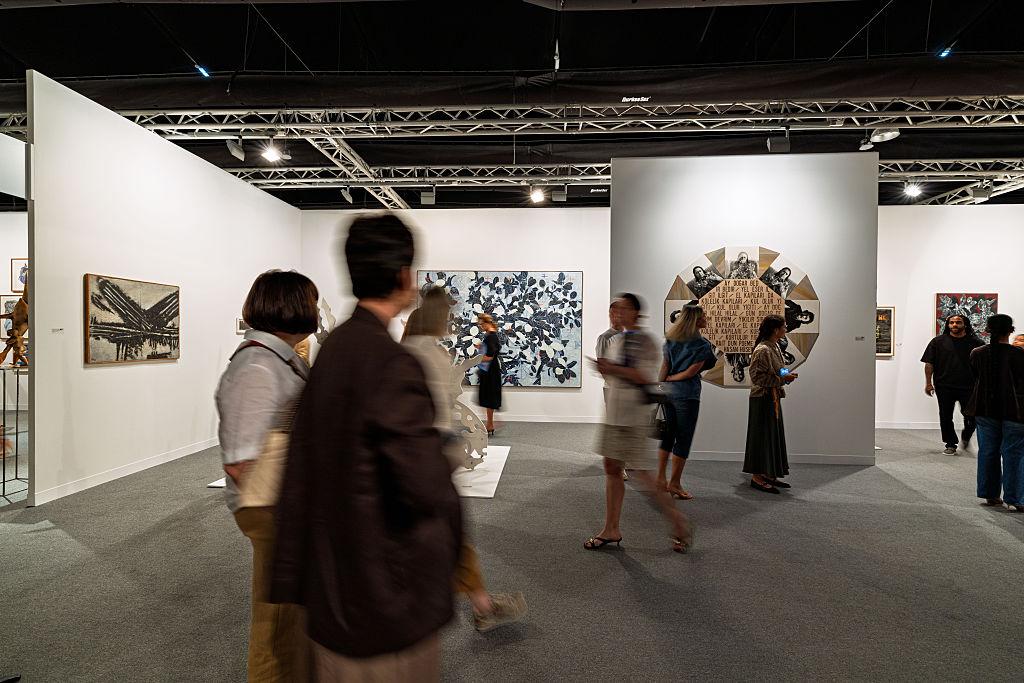
Structured as a strategic partnership between Frieze and the Department of Culture and Tourism – Abu Dhabi (DCT Abu Dhabi), the deal brings Frieze’s global portfolio to eight fairs and marks its first foray into the Middle East. Arriving just days before Frieze London and Frieze Masters—and on the heels of Hollywood talent executive Ari Emanuel finalizing his acquisition of Frieze through his newly minted company, Mari—the takeover signals that the Gulf has evolved from a promising emerging market into an indispensable arena of international cultural capital.

From Regional Anchor to Global Platform on Saadiyat Island
Founded in 2008, Abu Dhabi Art steadily cultivated a vital regional platform, growing from just over 100 galleries in 2024 to roughly 140 exhibitors for its November 2025 edition at Manarat Al Saadiyat. Yet while neighboring Dubai established an early commercial foothold through nearly two decades of Art Dubai and international gallery outposts such as Perrotin, Abu Dhabi pursued a monumental, museum-first cultural vision centered on the Saadiyat Cultural District.
H.E. Mohamed Khalifa Al Mubarak, Chairman of DCT Abu Dhabi, characterized the Frieze alliance as a “natural evolution” for the fair. By pairing Abu Dhabi’s museum-grade infrastructure—home to the Louvre Abu Dhabi and the forthcoming Guggenheim Abu Dhabi—with Frieze’s international collector network, CEO Simon Fox aims to infuse the November 2026 debut with a “distinctive Frieze approach” emphasizing experimental, artist-led projects alongside Middle Eastern artistic voices.
Frieze’s arrival unfolds amid an unprecedented influx of Western auction houses, dealers, and sovereign capital across the Gulf Cooperation Council:
Sovereign Capital and Marquee Auctions: Following Abu Dhabi investment fund ADQ’s landmark $1 billion investment in Sotheby’s, the auction house is launching Abu Dhabi Collectors’ Week this December—a series of marquee luxury sales accompanied by a museum-caliber exhibition.
Saudi Arabia’s Rising Footprint: Both Sotheby’s and Christie’s have expanded from their Dubai bases into Saudi Arabia, with Sotheby’s staging its inaugural Riyadh sale in February. Meanwhile, Bonhams announced its first Riyadh exhibition ahead of a November London auction, and historic Old Masters dealer Colnaghi unveiled plans for a permanent Riyadh outpost backed by a 10 million Saudi riyal (~$2.6 million) deal with Sarat Investment Holding.
Ari Emanuel’s Mari and the Battle of Fair Portfolios
The corporate architecture behind Frieze adds another compelling layer to this expansion. Founded as an art magazine in 1991 before launching its first London fair in 2003, Frieze has aggressively scaled through strategic acquisitions—absorbing Expo Chicago and The Armory Show in 2023 prior to its Gulf debut.
In May, Ari Emanuel acquired Frieze from Endeavor for his new live-events powerhouse Mari, backed by $2 billion in equity from investors including Apollo and—notably—the Qatar Investment Authority, alongside up to $900 million in debt. Positioning Frieze alongside the Madrid and Miami tennis Opens and collector-car auctioneer Barrett-Jackson, Mari treats blue-chip art fairs as premier global experiential assets.
As Frieze Abu Dhabi prepares to welcome international collectors in November 2026—just nine months after Art Basel opens its doors in Doha—the Gulf is no longer a peripheral stop on the art world calendar. Between competing fair empires, monumental museum openings, and sovereign-backed auction houses, the region has decisively claimed center stage in the future of global art commerce.